Driving the Hyundai Ioniq 5, I realized that the foaming and frothing over electric vehicles has subsided. When you take away the distinction that the Ioniq 5 runs on batteries while most other cars use gasoline, the Hyundai becomes just another vying personal transporter – a motor vehicle with a character and characteristics that will appeal to some people, and to some others, not.
Battery-powered autos now must subsist and survive, succeed or fail, on their merits. That means that each electric model must outmatch – or at least equal – the capabilities and usefulness of other autos its size. It must beat them, or match them, in the eyes of enough people to give a car maker incentive to keep it around, to continue making and selling it as a battery-powered alternative.
The Hyundai Ioniq 5 exhibits the characteristics that favor electric cars, and those working against them. In that way it points to the larger question suggested above: As battery cars now become a more commonplace part of the auto scene, how will they do?
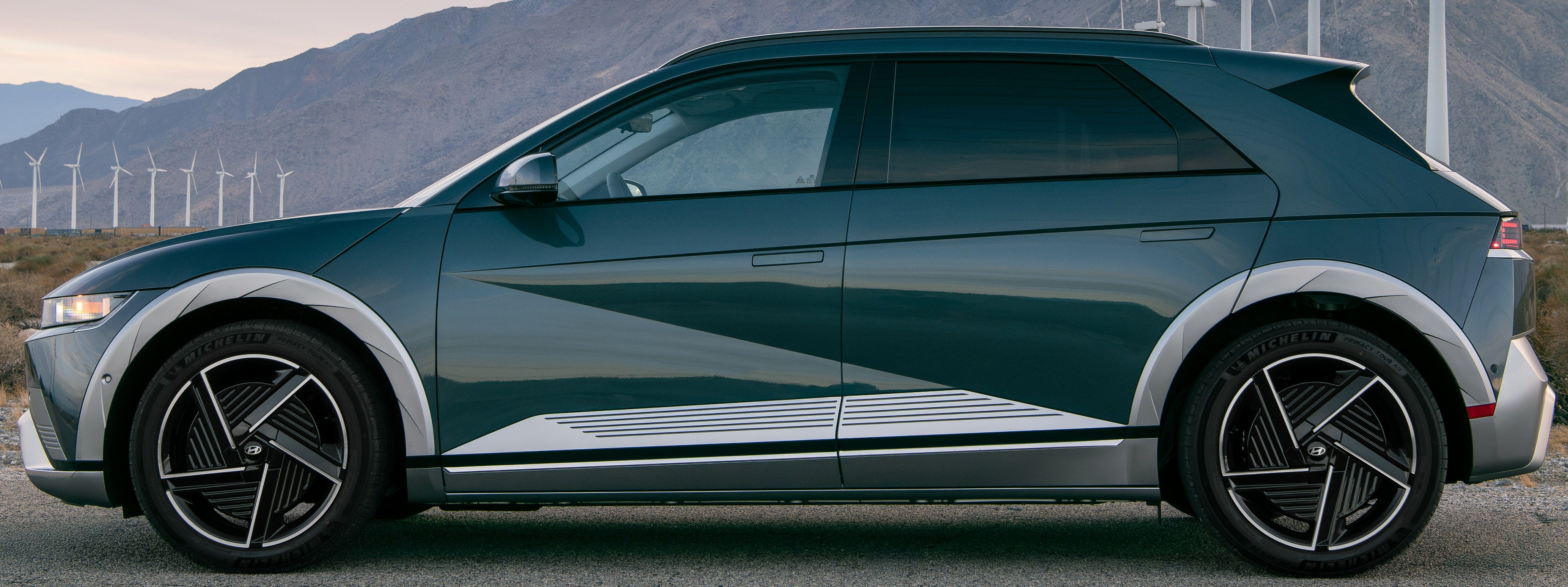
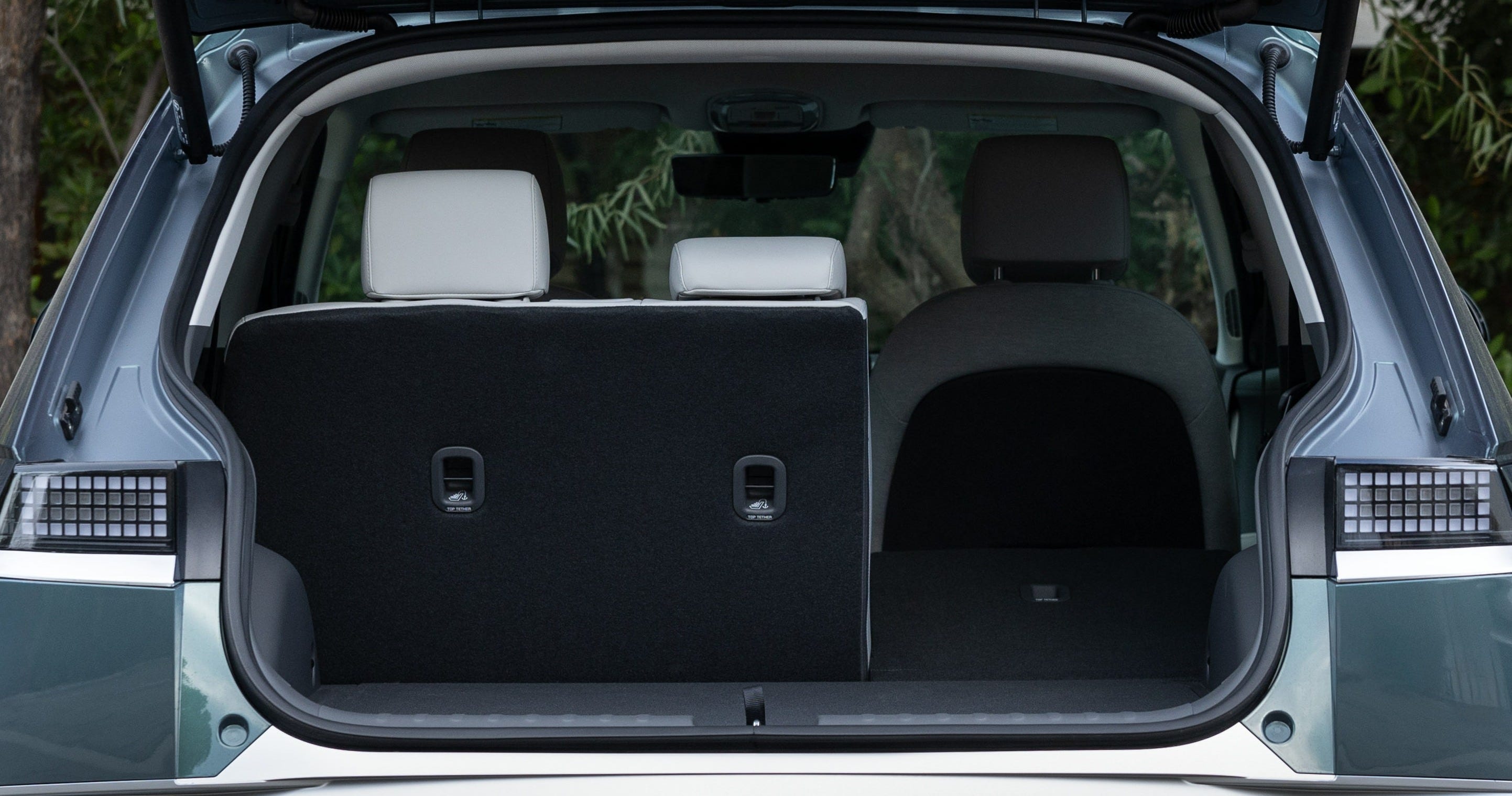
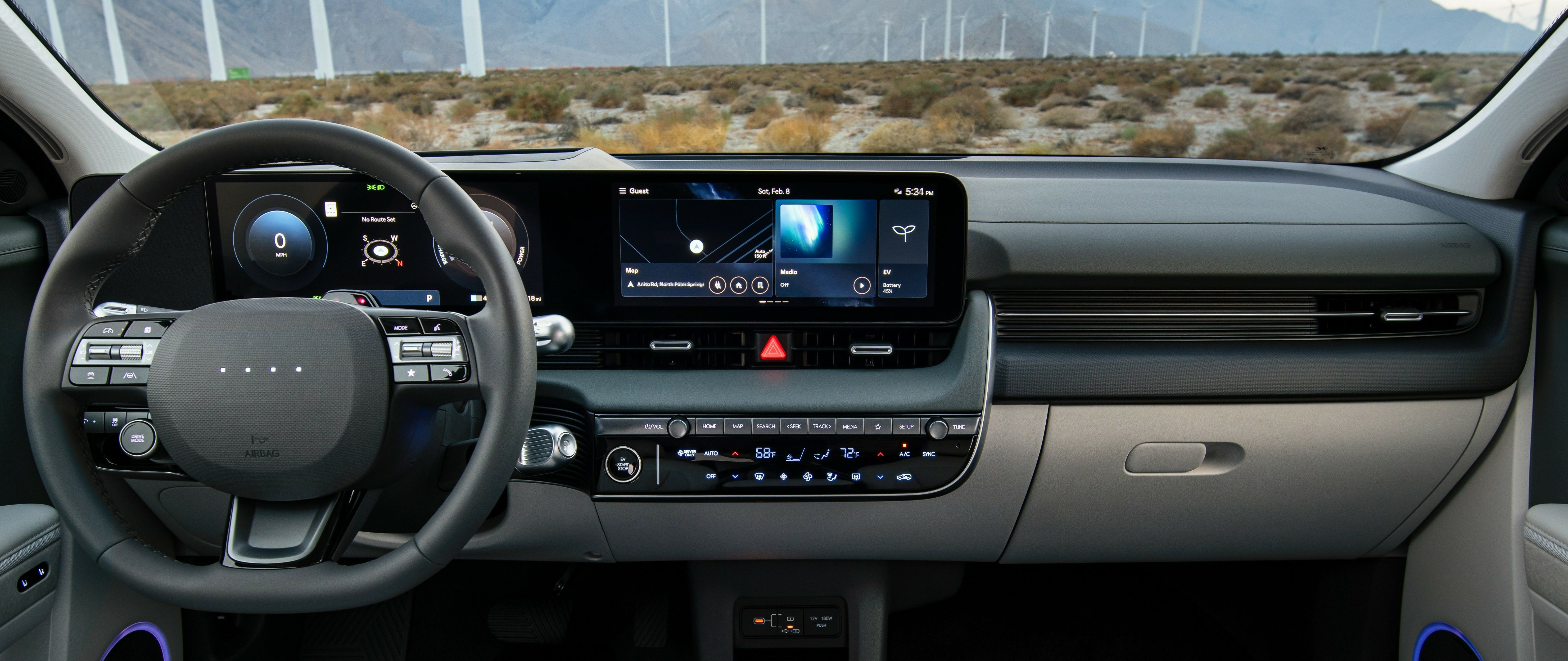
As a medium-largish hatchback wagon (the model officially is classified as a compact sport-utility vehicle), Ioniq 5 carries the desirable traits of that class. It carts a fair amount of stuff, with flexible cabin configurations for passenger and/or cargo hauling. Its rigid corners and sharply angular folds have led its body to be compared to Darth Vader’s helmet. But on the whole the space-travel aesthetic of Hyundai’s Ioniq 5 doesn’t travel too far and go overboard. Inside, its cabin design is settled and almost ordinary, rather than deeply immersed in smart-phone chic with glassy surfaces and screens like other electric cars.
Its cabin floor is noticeably flat, which is typical of battery cars. Structurally they’re as much like a roller skate as they’re like a traditional gas-fueled vehicle with its power-distribution boxes and shafts. Also, Ioniq 5 is heavy, owing largely to battery weight. That gives it a planted, physically assuring feel when in motion. Its electric motors respond immediately to foot-pedal changes, another shared characteristic of electric cars – EVs, as the various models are lumped together.
Another uniquely electric advantage is the cadre of people who insist that everyone drive battery cars in order to save humanity. Their contention is that gas-fueled autos poison the air, which will lead to destructive weather. That group may buy autos like Ioniq 5 out of a show of principle. But how many people sincerely adhere to that principle is still unknown. Is it enough to sustain widespread adoption of EVs?
The Ioniq 5 also possesses the liabilities that ride with EVs. A big one is high price. The evaluation model I drove carried a $59,575 price tag. It was a high-end, Limited version with four-wheel power, accomplished by two separate electric motors, one for front wheels and one for rear. As a family the Hyundai Ioniq 5 starts at $44,075 for a rear-wheel-drive version with one electric motor. A similarly sized, gasoline-powered, five-seat Hyundai Tuscon SUV starts at $30,155 for a front-drive model (2025 prices).
The other discouraging aspect it shares with all EVs: Long recharge times. Gasoline-fueled vehicles are refueled in two- or three-minute stops at gas stations. Battery cars need hours to recharge with enough juice to cover comparable miles.
Now that electric cars are more commonplace – with a healthy variety of models, including the Hyundai Ioniq 5, sold by a variety of companies – people can sample and decide which propulsion means is better for them. The large money refunds offered to battery-car buyers by some state governments and the U.S. government will wind down, probably soon. Then electrics will have to compete entirely on their merits.
In its About statement, CarSense observes that we Americans don’t love cars. We love mobility. (Find it here.) The CarSense Precepts lay out conditions that vehicles must meet to continue to provide mobility to the great mass of Americans, not just to wealthy ones. (Find it here.) If battery cars meet those conditions, they’ll make a home in the boisterous American auto market.
For a discussion about the contradiction and hypocrisy of making battery cars that use more energy, not less, a hypocrisy that is commonplace in EVs, please read Hyundai Ioniq 5": Go fast without gas Find it here.
And for a look at how our 20-year-old-Driver columnist John Wilson finds the Ioniq 5 futuristic, in contrast to how it’s presented here, read Hyundai Ioniq 5 N: “It hugs the road and always stays grounded.” Find it here.
Finally, to understand why EVs accelerate quickly – which enables their promoters to hype them as go-fast vehicles and directly contradict the rationale by which electrics are hyped by some clamorous advocates – please see the CarSense article An Electric Experience: The physics behind the hypocrisy. Find it here.
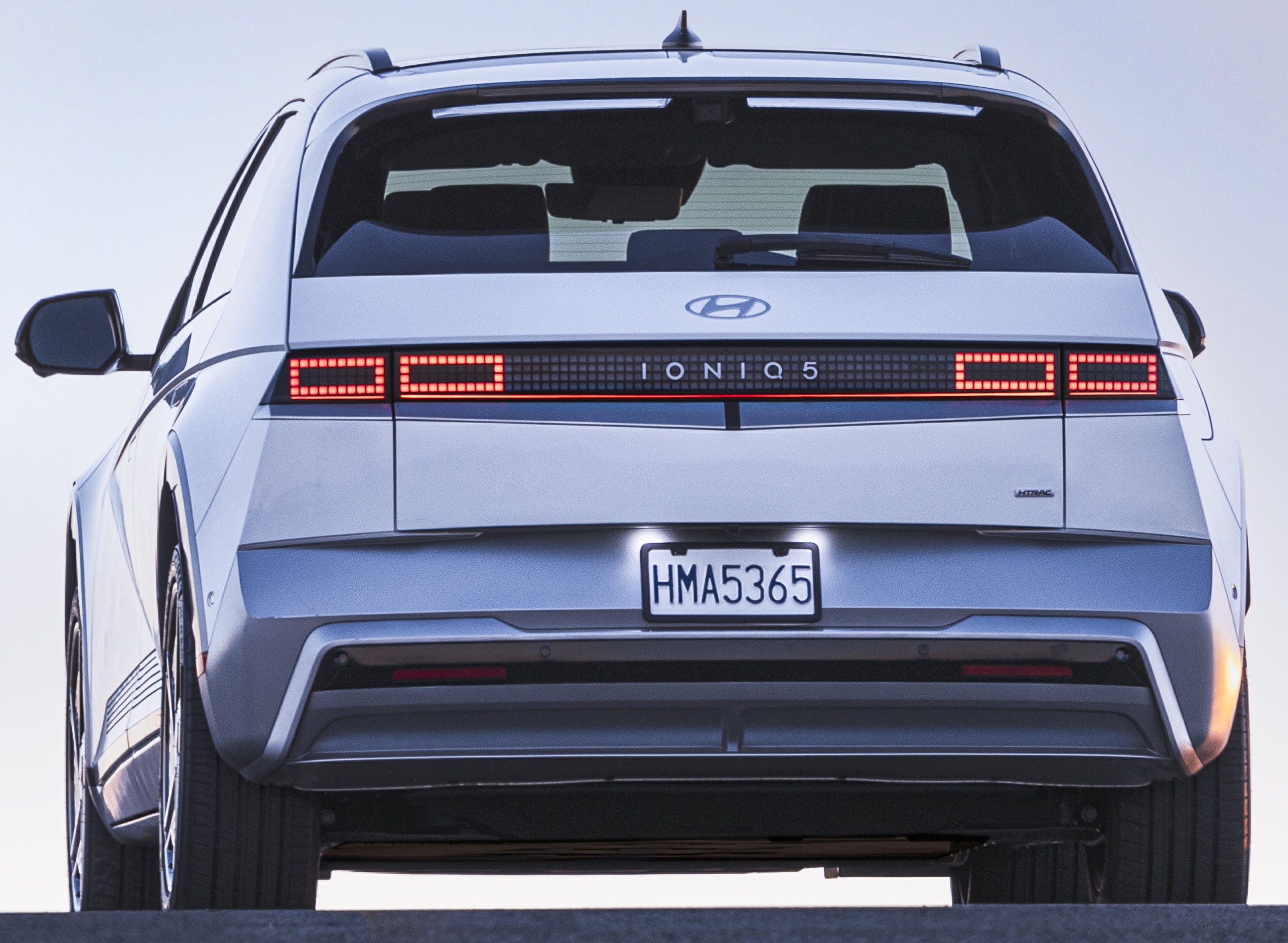
”On the whole the space-travel aesthetic of Hyundai’s Ioniq 5 doesn’t travel too far and go overboard.”