The immutable laws of physics, first explained to us by Sir Isaac Newton in the year 1687, account for how electric vehicles accelerate more rapidly than cars with gasoline engines. Their near-immediate power surge separates the experience of driving electric from what you feel in a conventional gasoline-powered car.
Inertia and momentum account for the difference: the time and effort required to make objects move. Both gasoline and battery power have to battle the mass of the vehicle to start it rolling and keep in rolling. The enormous weight of the car, the rolling resistance (friction) of its tires against the road, and the obstruction of air molecules that need to be pushed aside by a moving car, are equal foes for gas and electric. In fact, they put electric cars at a disadvantage, because the dense heft of their big batteries make electrics weigh more.
But for power delivery, gasoline-fueled internal combustion engines need more time. The engines have a lot of internal parts that must be made to move, and move fast. Pistons, rods, shafts, pulleys and other whirring gizmos require some wind-up time. So do the gears and shafts in the transmission, and the stout connectors that eventually spin the wheels. They all take a little time to overcome inertia and build sufficient momentum to get the car moving – including when you goose the pedal because you want the auto to leap from a standstill.
On the other hand, the full power from an electric motor is available in nearly an instant. Sure, there is some inertial resistance inside the motor. But since its construction is so much simpler than an internal combustion engine’s, with so many fewer moving parts, an electric dynamo handily beats a gasoline competitor in coming up to high speed. What’s more, in an EV electric motors can be connected more directly to the wheels, so they have much less inertia from intermediary power transmitters like shafts and gears to overcome.
So while a gas-fueled motor makes you sit through its own power build-up while it simultaneously overcomes the inertia of the car’s mass, electric motors have only the stubbornness of the car’s mass to overcome. You feel your vehicle surging smoothly and assertively as they do.
But both a gasoline-driven model and a battery car consume more power when they’re made to dash rapidly. Fast starts and high-speed driving deplete both a gasoline tank and a battery more quickly than temperate, moderate motoring. They consume more energy, usually lots more. Yet if electrics really are essential to human survival, as we’re told, because we need to curb energy use to fend of an “existential threat”, shouldn’t EVs be parsimonious? Shouldn’t they be made to use less, not more power?
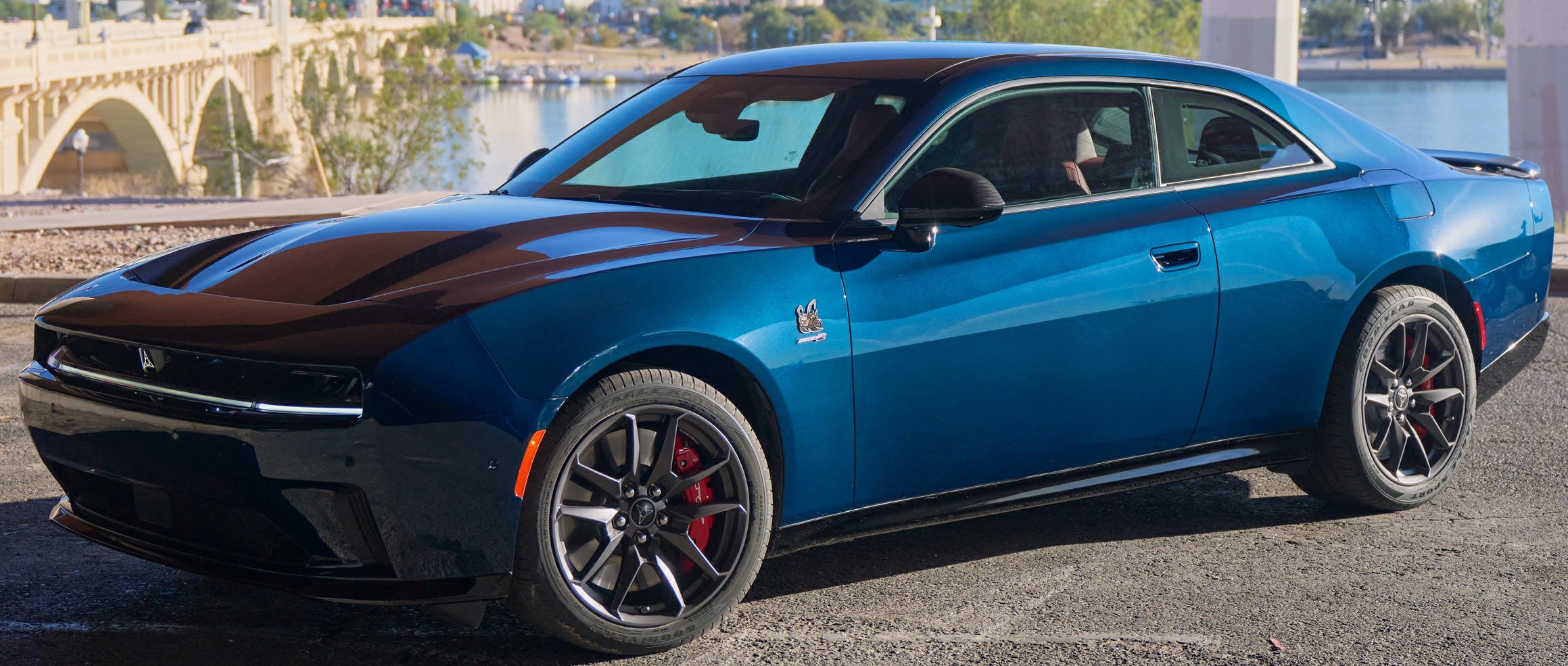
The 2025 Dodge Charger Daytona Scat Pack is an electric vehicle that calls itself a muscle car and emphasizes go-fast energy consumption.